
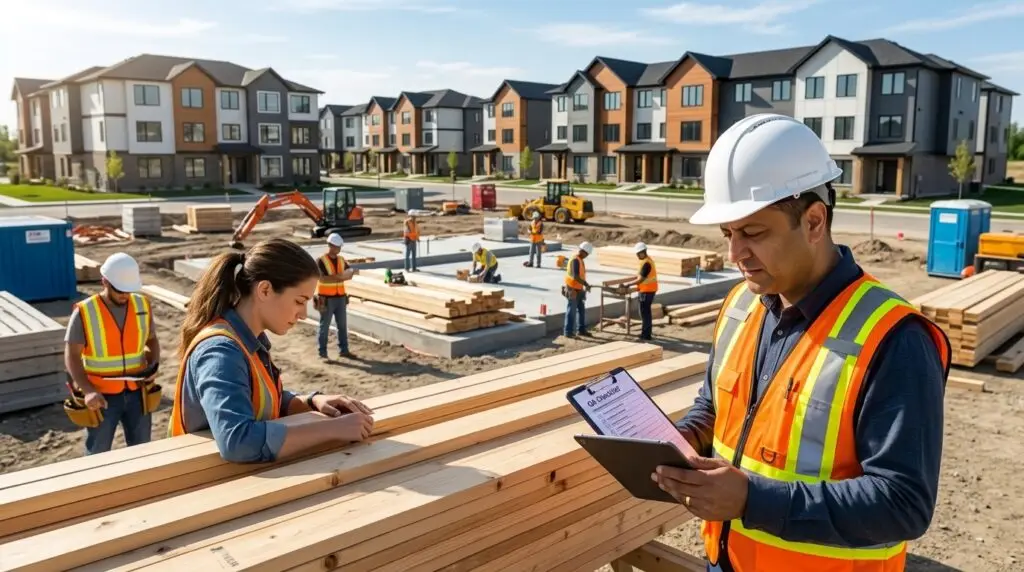
Construction Quality Assurance and Control for Durable Affordable Housing in Canada
Construction quality assurance and quality control are fundamental to responsible project delivery in Canada. Rather than treating quality as a final inspection activity, successful teams plan for it from the early stages of a project. For Canadian construction, especially in the realm of affordable housing, a practical approach begins with clear specifications, coordinated responsibilities, and a consistent method for reviewing completed work.
The objective is not to select the most expensive solution, but to make informed decisions that meet project requirements, support intended use, and deliver long-term value.
1. Define Quality Requirements Early (Quality Assurance)
Every project must have clear requirements suited to its design, intended use, and applicable standards. Project teams need to understand the expected outcomes, who is responsible for each activity, and how completed work will be evaluated.
- Clear Documentation: Detailed specifications help reduce uncertainty when multiple teams or trades are working on connected activities. It also makes project changes and alternative proposals easier to assess.
- Understanding Project Needs: Planning must account for the practical needs of future occupants and building operators. These details guide decisions about materials, sequencing, and quality checks, making it easier to evaluate the impact of any proposed changes.
2. Coordinate Materials, Schedules, and Workmanship
Procurement and site execution must support the same project objectives. Materials need to match approved requirements, and deliveries should align seamlessly with the construction schedule.
- Material Checks: Purchasing decisions should begin with the project specification. While price and availability matter, suitability, dimensions, finish, performance criteria, and installation requirements are equally critical. If an alternative material is proposed, it must be assessed through the appropriate professional approval process so that a purchasing decision does not unintentionally lower project standards.
- Trade Coordination: Before work begins, teams should understand relevant drawings, specifications, and dependencies. Coordination is especially critical when several trades depend on the same work area or sequence, helping to avoid conflicting assumptions and resolving questions before work proceeds.
3. Plan Inspections and Corrective Actions (Quality Control)
Construction quality control focuses on reviewing work and materials against established requirements. Quality checks should be scheduled according to the work being completed, not left entirely to the final stage of the project.
- Reviewing Workmanship: The purpose of inspections is to identify whether the work aligns with approved information. Where an issue is found, details should be recorded, the required action communicated, and the project’s process followed to confirm resolution.
- Corrective Action & Closeout: The process must include thorough closeout documentation. This ensures that unresolved items, relevant product information, and warranty details do not get overlooked as the project wraps up.
4. Building Durable Affordable Housing: Value Beyond Initial Cost
Affordable housing requires careful planning and responsible cost management. However, the initial construction budget is only one consideration when evaluating a housing project. Material suitability, workmanship, quality checks, and the handover process are equally vital to long-term success.
- Balancing Cost and Quality: Quality control and cost management can support one another. Clear requirements and timely reviews help identify problems before additional work is affected, preventing costly rework. Responsible cost management should be connected with quality—not used as a reason to ignore essential requirements. Avoidable waste, unclear changes, and poor coordination can create pressure, while unchecked reductions in quality can undermine project objectives.
- Meaningful Handover: A useful handover matters just as much as the build. Relevant product documentation, available warranty information, and a clear record of outstanding items help the next stage of building use begin with better information and fewer operational surprises.
Conclusion
Good quality assurance and control are not just about one inspection at the end; they represent a planned, structured process that helps a team understand requirements and manage the project consistently. Effective construction quality connects approved requirements with the materials and workmanship delivered on site.
At Rob Athwal | RobAthwal, the principle is to build with purpose. The goal is to contribute to a practical discussion about quality, value, and affordable housing in Canada by considering cost, workmanship, and intended performance together throughout the construction process. Durable affordable housing depends on informed planning, suitable materials, coordinated delivery, and attention to the building’s needs long after completion day.